
Balloon Sinuplasty Los Angeles
Minimally Invasive, In-Office Relief for Chronic Sinusitis
Southern California Sinus Institute | Dr. Alen Cohen, Board-Certified ENT | (818) 888-7878
If you are one of the millions of Americans suffering from chronic or recurrent sinusitis, you know how relentlessly it can affect your daily life. The throbbing sinus headaches, the constant facial pressure, the postnasal drip disrupting your sleep, the cycle of antibiotics that never fully resolve the problem , sinusitis is far more than a nuisance. At the Southern California Sinus Institute in Los Angeles, board-certified ENT specialist Dr. Alen Cohen has treated thousands of sinusitis patients throughout greater Los Angeles and Southern California using a breakthrough in-office solution: Balloon Sinuplasty. This page covers everything you need to know , from what the procedure is and how it works, to recovery, results, and whether it is right for you.
1. What Is Balloon Sinuplasty?
Balloon Sinuplasty (clinically known as Balloon Sinus Dilation or BSD) is an FDA-cleared, minimally invasive procedure designed to permanently relieve the symptoms of chronic and recurrent sinusitis. Rather than cutting or removing tissue as in traditional sinus surgery, balloon sinuplasty uses a small, flexible catheter with a tiny balloon at its tip to gently expand the natural drainage openings of the sinuses. The procedure restores proper sinus drainage and ventilation without altering the natural anatomy of the sinuses.
Dr. Alen Cohen has been performing balloon sinuplasty since 2009 , the year the procedure received in-office FDA approval , and has since treated thousands upon thousands of patients. His West Hills, Los Angeles center has been recognized as a nationwide Sinus Center of Excellence, and he regularly trains ENT surgeons from across the United States on how to safely and effectively perform this procedure in an office setting under local anesthesia.
Understanding Sinusitis: The Problem Balloon Sinuplasty Solves
Sinusitis is an inflammation of the paranasal sinuses , the air-filled cavities in your skull that surround your nose and eyes. When functioning normally, these sinuses produce thin mucus that drains easily into the nasal passages. When the sinus drainage openings become obstructed or inflamed, mucus accumulates, creating the ideal environment for infection and chronic inflammation.
Sinusitis is classified by duration: acute (under 4 weeks), subacute (4–12 weeks), chronic (12+ weeks), and recurrent (4+ episodes per year). Balloon sinuplasty is most commonly indicated for chronic and recurrent sinusitis patients who have not found lasting relief with medication.
Common causes of sinusitis include:
- Allergies and allergic rhinitis causing persistent sinus inflammation
- Nasal polyps , benign growths that physically block sinus drainage openings
- Deviated nasal septum restricting airflow and drainage
- Enlarged inferior turbinates contributing to nasal obstruction
- Chronic bacterial or fungal infections
- Autoimmune or inflammatory conditions
- Environmental irritants: pollution, smoke, mold, chemical fumes
Diagram: The Sinuses and How They Drain
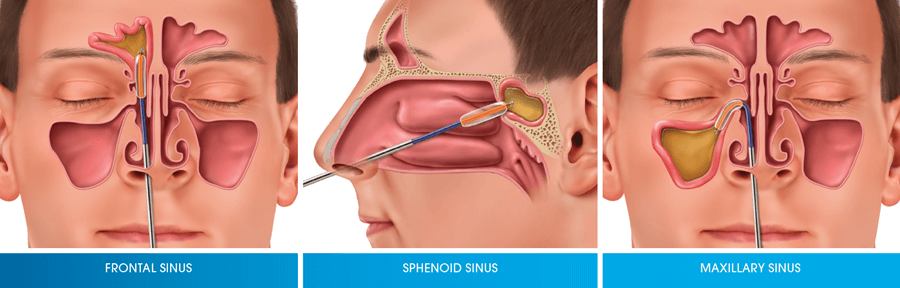
Common Symptoms of Sinusitis That Balloon Sinuplasty Can Relieve
- Persistent facial pain, pressure, or fullness , especially around forehead, cheeks, and eyes
- Sinus headaches, typically worse in the morning or when bending forward
- Chronic nasal congestion and difficulty breathing through the nose
- Thick, discolored nasal discharge or postnasal drip
- Chronic cough caused by postnasal drainage
- Reduced or lost sense of smell and taste
- Ear congestion, fullness, or recurrent ear infections
- Recurrent eye infections
- Tooth pain, particularly in the upper teeth (from maxillary sinus pressure)
- Fatigue, difficulty sleeping, and general malaise
Ready to Breathe Easy? Schedule Your Consultation Today
Call Dr. Alen Cohen at (818) 888-7878 | Southern California Sinus Institute, West Hills, LA
Most PPO Insurance Plans & Medicare Accepted | In-Office | No General Anesthesia | Back to Normal in 24-48 Hours
2. How Balloon Sinuplasty Works: Step-by-Step
Understanding exactly what happens during your procedure can significantly reduce any anxiety and help you prepare. Here is a detailed, step-by-step walkthrough of Dr. Cohen’s in-office balloon sinuplasty process:
Before the Procedure: Preparation
Your procedure begins before you even sit in the treatment chair. Dr. Cohen’s team will have already reviewed your CT imaging and performed an in-office nasal endoscopy at your consultation to confirm the diagnosis and identify exactly which sinus openings require dilation. On procedure day:
- You will receive oral sedation medications approximately 45–60 minutes before the procedure begins. These help you feel relaxed and calm without putting you to sleep.
- A driver must accompany you, as the sedation medications will make it unsafe to drive.
- Topical decongestant and anesthetic sprays are applied inside the nasal passages to begin numbing the area. This takes several minutes to take full effect.
- Local anesthetic injections are then administered precisely to the target sinus areas, ensuring complete comfort during the procedure.
During the Procedure: Step-by-Step
- Step 1 , Guide Wire Insertion: Dr. Cohen introduces a thin, flexible guide wire through the nostril and carefully navigates it into the natural opening (ostium) of the targeted sinus under endoscopic visualization. No incisions are made anywhere on the body.
- Step 2 , Catheter Placement: A small catheter is advanced over the guide wire, positioning the deflated balloon precisely at the blocked sinus opening.
- Step 3 , Balloon Inflation: The balloon is inflated for approximately 5–7 seconds. During inflation, the balloon gently fractures and remodels the thin bony walls surrounding the sinus opening, widening the passageway. Most patients describe a sensation of pressure , not pain.
- Step 4 , Saline Flush: Once the balloon is deflated and removed from that sinus, Dr. Cohen irrigates the sinus cavity with saline solution to flush out accumulated mucus, debris, and any infection present.
- Step 5 , Repeat for Additional Sinuses: The process is repeated for each sinus requiring treatment. Most patients have 2–4 sinuses dilated during a single session.
- Step 6 , Completion: No sutures, packing, or dressings are placed. The procedure is complete. The sinus openings retain their newly widened shape permanently.
After the Procedure: Immediate Post-Procedure
You will rest in the office for 20–30 minutes following the procedure while the sedation wears off. Dr. Cohen or his team will review your post-procedure care instructions, including saline rinse protocols, activity restrictions, and what symptoms to expect in the first few days. Your driver will take you home, and most patients feel well enough to resume light activities the same evening.
Watch Balloon Sinuplasty Being Performed
3. Balloon Sinuplasty vs. Traditional Sinus Surgery
For decades, the standard surgical treatment for chronic sinusitis was Functional Endoscopic Sinus Surgery (FESS) , a procedure performed in a hospital operating room under general anesthesia that involves removing tissue and bone to open sinus passages. While FESS remains an important tool for complex cases, balloon sinuplasty offers a compelling alternative for the majority of sinusitis patients, with equivalent long-term outcomes and dramatically reduced risk, cost, and downtime.
|
Category |
Balloon Sinuplasty (In-Office, Dr. Cohen) |
Traditional FESS (Operating Room) |
|
Setting |
In-office procedure room |
Hospital or surgery center OR |
|
Anesthesia |
Local anesthesia + oral sedation |
General anesthesia (intubation) |
|
Tissue/Bone Removal |
None , anatomy preserved |
Yes , tissue and bone removed |
|
Procedure Duration |
20–45 minutes |
1–3 hours |
|
Recovery Time |
24–48 hours |
7–14+ days |
|
Post-Op Pain |
Minimal , OTC pain relievers |
Moderate to significant |
|
Nasal Packing |
Not required |
Often required (uncomfortable) |
|
Return to Work |
Next day for most patients |
1–2 weeks typically |
|
Facility Cost |
Office-based , dramatically lower |
OR + anesthesia + facility fees |
|
Insurance Coverage |
Most PPO plans and Medicare |
Most PPO plans and Medicare |
|
Complication Risk |
Very low |
Low to moderate |
|
Results Durability |
Long-lasting / permanent |
Long-lasting / permanent |
|
Suitable For |
Chronic/recurrent sinusitis, no polyps |
Complex cases, extensive polyps |
Most PPO insurance plans and Medicare actively prefer in-office balloon sinuplasty over operating room sinus surgery precisely because it delivers comparable outcomes at a significantly lower total cost. Dr. Cohen’s in-office approach eliminates operating room facility fees, anesthesiologist costs, and the extended recovery burden , benefits that matter both to patients and to insurers.
Ready to Breathe Easy? Schedule Your Consultation Today
Call Dr. Alen Cohen at (818) 888-7878 | Southern California Sinus Institute, West Hills, LA
Most PPO Insurance Plans & Medicare Accepted | In-Office | No General Anesthesia | Back to Normal in 24-48 Hours
Who Is an Ideal Candidate for Balloon Sinuplasty?
Balloon sinuplasty is highly effective for a broad range of sinusitis patients, but it is most appropriate for individuals whose anatomy and clinical picture align with what the procedure addresses. During your consultation, Dr. Cohen will conduct a comprehensive evaluation , including in-office nasal endoscopy and review of CT sinus imaging , to determine whether you are a strong candidate.
You May Be an Excellent Candidate If You:
- Have been diagnosed with chronic sinusitis (symptoms lasting 12+ weeks despite treatment)
- Experience recurrent acute sinusitis , four or more infections per year
- Have not achieved adequate, lasting relief with antibiotics, nasal corticosteroid sprays, antihistamines, or nasal saline rinses
- Are exhausted by the cycle of monthly infections and repeated rounds of antibiotics
- Have confirmed sinus obstruction visible on CT imaging without extensive nasal polyps
- Want to reduce or eliminate ongoing dependence on sinus medications
- Prefer to avoid operating room surgery with general anesthesia
- Have had previous sinus surgery and are experiencing recurring symptoms
- Are medically appropriate for a brief in-office procedure under local anesthesia

Balloon Sinuplasty May Not Be the Best Option If You:
- Have extensive nasal polyps requiring tissue removal (standard FESS may be more appropriate)
- Have significantly distorted nasal anatomy that cannot be addressed with dilation alone
- Have sinusitis that is well-controlled with current medical management
- Are not medically appropriate for even mild oral sedation
Not every sinusitis patient requires intervention. Dr. Cohen is committed to recommending treatment only when it is genuinely in the patient’s best interest. If medication management or allergy treatment is the better path, he will say so , and if balloon sinuplasty is right for you, he will explain exactly why.
5. What to Expect: Before, During, and After
Before Your Procedure
Your journey begins at your initial consultation with Dr. Cohen. At this visit, he will:
- Review your complete sinus symptom history and prior treatments
- Perform an in-office nasal endoscopy (a quick, comfortable in-office camera exam of the nasal passages and sinus openings)
- Review CT sinus imaging (which you may bring from a prior scan or have ordered)
- Discuss whether balloon sinuplasty , with or without turbinate reduction , is appropriate for you
- Explain the procedure in full, answer your questions, and obtain your informed consent
If you are a candidate, the procedure will be scheduled at your convenience. Dr. Cohen’s team will provide detailed pre-procedure instructions, which typically include:
- Temporarily pausing blood thinners (if applicable and in coordination with your prescribing physician)
- Arranging for a driver on procedure day
- Eating a light meal beforehand (no strict fasting required as with general anesthesia)
- Filling your pre-procedure prescriptions (oral sedatives and other medications) in advance
During Your Procedure
You will arrive at Dr. Cohen’s West Hills office approximately 30–45 minutes before the scheduled procedure time. After check-in and oral sedation administration, you will be comfortably positioned in the procedure chair. The topical and local anesthetic application process takes approximately 15–20 minutes. The balloon sinuplasty itself typically takes 20–45 minutes depending on the number of sinuses treated. You will be awake but relaxed throughout , most patients report feeling pressure sensations but no significant pain. Dr. Cohen and his team are experienced at keeping patients comfortable and will communicate with you throughout.
After Your Procedure
After a brief 20–30 minute observation period, your driver will take you home. You can expect:
- Mild nasal congestion and stuffiness for 2–5 days as the sinuses respond to dilation
- Some drainage of mucus (possibly slightly blood-tinged) for 24–72 hours , this is normal and expected
- Mild facial pressure or tenderness manageable with over-the-counter pain relievers
- Instructions to begin saline nasal rinses the following day to keep the sinuses clear
- Avoidance of strenuous exercise and forceful nose blowing for 5–7 days
- A follow-up appointment with Dr. Cohen within 2–4 weeks to assess healing
Ready to Breathe Easy? Schedule Your Consultation Today
Call Dr. Alen Cohen at (818) 888-7878 | Southern California Sinus Institute, West Hills, LA
Most PPO Insurance Plans & Medicare Accepted | In-Office | No General Anesthesia | Back to Normal in 24-48 Hours
6. Balloon Sinuplasty Recovery Timeline
One of the most significant advantages of in-office balloon sinuplasty is its minimal recovery burden. Unlike traditional sinus surgery , which can require 1–2 weeks away from work and weeks of post-operative discomfort , balloon sinuplasty patients typically resume normal activities within 24–48 hours. Dr. Cohen routinely performs the procedure on Fridays specifically so patients can rest over the weekend and return to work on Monday.
| Timeframe | What to Expect | Activity Level |
| Procedure day (hours 1–4) | Mild congestion, some drainage, drowsiness from sedation | Rest at home , no driving |
| Day 1–2 | Nasal stuffiness, possible mild pressure, some mucus drainage | Light activity; most feel functional |
| Day 2–3 | Significant improvement; congestion beginning to clear | Return to desk work, school, light daily tasks |
| Day 4–7 | Noticeable clearing of sinuses; breathing begins to improve | Return to most normal activities; avoid strenuous exercise |
| Week 2 | Most patients feel substantially better; sinus openings settling | Full normal activity including exercise |
| Week 3–4 | Follow-up visit with Dr. Cohen; most patients report major improvement | Complete return to normal |
| 1–3 months | Full benefit realized; sinuses draining normally; significant reduction in infections | Normal |
Individual recovery experiences vary. Patients who also undergo turbinate reduction at the same session may experience slightly more congestion in the first few days as both the turbinates and sinuses heal simultaneously , but the combined procedure typically results in a significantly more dramatic improvement in nasal breathing once healing is complete.
7. Balloon Sinuplasty Success Rates and Clinical Data
Balloon sinuplasty is backed by a robust and growing body of clinical evidence. Published studies , including multicenter clinical trials and long-term follow-up data , consistently demonstrate high rates of patient satisfaction and sustained symptom improvement.
>90%
of patients report significant symptom improvement
2+ yrs
of sustained improvement shown in long-term studies
1000s
of patients treated by Dr. Cohen since 2009
<1%
serious complication rate in published literature
Key Clinical Findings
- A landmark multicenter study published in the Otolaryngology – Head and Neck Surgery journal found that over 90% of patients who underwent balloon sinuplasty reported meaningful improvement in disease-specific quality-of-life scores.
- Long-term follow-up data (2+ years post-procedure) show that the majority of patients maintain significant symptom improvement without requiring additional sinus surgery.
- Studies consistently report dramatic reductions in antibiotic use, physician office visits, and work/school missed days following balloon sinuplasty.
- Revision rates following balloon sinuplasty are low, with most patients not requiring repeat treatment.
- In patients with recurrent acute sinusitis, balloon sinuplasty has been shown to reduce the number of annual sinus infections by an average of more than 70%.
What Dr. Cohen’s Patients Report
- Instant or near-instant relief from sinus pain and pressure following the procedure
- Dramatic reduction in the frequency of sinus infections , many patients go from monthly infections to one or none per year
- Significantly reduced reliance on antibiotics, decongestants, nasal sprays, and other sinus medications
- Improved quality of sleep and resolution of nighttime nasal congestion
- Greater energy, improved exercise tolerance, and enhanced overall wellbeing
- Substantial reduction in medical costs from fewer office visits, urgent care trips, and prescriptions
Ready to Breathe Easy? Schedule Your Consultation Today
Call Dr. Alen Cohen at (818) 888-7878 | Southern California Sinus Institute, West Hills, LA
Most PPO Insurance Plans & Medicare Accepted | In-Office | No General Anesthesia | Back to Normal in 24-48 Hours
8. Insurance Coverage for Balloon Sinuplasty
One of the first questions patients ask is: will my insurance cover this? The answer, for most patients, is yes , provided the appropriate clinical criteria are met.
What Insurance Typically Covers
Balloon sinuplasty is covered by the majority of commercial PPO insurance plans and by Medicare when the following criteria are documented:
- A diagnosis of chronic or recurrent sinusitis confirmed by clinical evaluation
- Documented failure of appropriate medical management (antibiotics, nasal steroids, allergy treatment)
- Imaging evidence (CT scan) confirming sinus disease
HMO plans may require a referral from your primary care physician before coverage is authorized. Dr. Cohen’s billing and insurance team is experienced in navigating the pre-authorization process and will work on your behalf to verify your specific benefits before scheduling your procedure.
Why Insurers Prefer In-Office Balloon Sinuplasty
Most PPO insurers and Medicare actively prefer in-office balloon sinuplasty over operating room sinus surgery because the in-office approach eliminates operating room facility fees, anesthesiologist fees, and recovery room costs. The result is a significantly lower total cost of care , which translates to lower copays and out-of-pocket expenses for patients and reduced expenditure for insurers. This alignment of interests is one reason why coverage for balloon sinuplasty has expanded dramatically in recent years.
9. Cost and Financial Transparency
At the Southern California Sinus Institute, we believe patients deserve clear, honest information about costs before making a treatment decision. Here is what you should know about the in office balloon sinuplasty cost Los Angeles.
Cost Comparison: In-Office vs. Operating Room
| Cost Component | In-Office Balloon Sinuplasty | Operating Room Sinus Surgery |
| Facility fee | Office co-pay only | Hospital/surgery center facility fee |
| Anesthesia | None (local only) | Anesthesiologist fee |
| Surgeon fee | Standard specialist fee | Standard surgeon fee |
| Recovery room | Not applicable | Recovery room fee |
| Post-op visits | Standard co-pays | Standard co-pays |
| Time off work | 1–2 days (lost income minimal) | 7–14 days (significant lost income) |
| Ongoing medication costs (post-procedure) | Dramatically reduced | Reduced but typically still needed |
For patients with insurance, your out-of-pocket responsibility typically includes your specialist co-pay and any applicable deductible or coinsurance, which varies by plan. For patients without insurance or with high-deductible plans, Dr. Cohen’s team can discuss self-pay options and provide a clear estimate prior to scheduling. Contact our office at (818) 888-7878 to discuss your specific financial situation , we are committed to making this procedure accessible.
10. Frequently Asked Questions (FAQ)
Below are answers to more than 20 of the questions Dr. Cohen is most frequently asked about balloon sinuplasty. If you have a question not answered here, please call our office at (818) 888-7878.
Q: Is balloon sinuplasty covered by insurance?
A: Yes , the procedure is covered by most PPO insurance plans and Medicare when appropriate clinical criteria are met, including documented chronic or recurrent sinusitis that has not responded to medical management. Our team will verify your specific benefits before your procedure.
Q: Does balloon sinuplasty hurt?
A: No, the procedure is not painful for the vast majority of patients. Dr. Cohen applies thorough topical and local anesthesia to the nasal passages before beginning. Oral sedation helps you feel relaxed and calm. Most patients describe pressure sensations during balloon inflation, but not pain. Any mild discomfort after the procedure is well-managed with over-the-counter pain relievers.
Q: Will I be put to sleep (general anesthesia)?
A: No. Dr. Cohen’s in-office technique uses local anesthesia , topical sprays plus local injections , combined with oral sedation medications. You will be awake but calm and comfortable throughout. The absence of general anesthesia is one of the key safety advantages of the in-office approach.
Q: Does the balloon stay inside after the procedure?
A: No. The balloon is a temporary instrument used only to reshape the sinus opening. Once the dilation is complete, the balloon is fully deflated and removed. The sinus opening permanently retains its newly widened shape without any implants, stents, or foreign material remaining in the body.
Q: What are the most common side effects after the procedure?
A: The most common post-procedure experiences are temporary and expected: mild nasal congestion for 2–5 days, some drainage of mucus (occasionally slightly blood-tinged) for 24–72 hours, and mild facial pressure or tenderness. These effects are a normal part of the healing process and resolve on their own. Serious complications are rare and occur in less than 1% of cases in published literature.
Q: How long will I miss work or school?
A: Most patients miss only 1–2 days. Dr. Cohen commonly performs the procedure on a Friday so patients can use the weekend to rest and return to work on Monday. Patients with desk jobs or remote work sometimes return the day after the procedure. Physical laborers or those in highly active professions may need 3–5 days.
Q: How long has balloon sinuplasty been available and how experienced is Dr. Cohen?
A: Balloon sinuplasty was first FDA-cleared in 2005 and approved for in-office use in 2009. Dr. Cohen began performing the in-office procedure in 2009 and has since treated thousands of patients , making him one of the most experienced balloon sinuplasty practitioners in the United States. His center has been recognized as a nationwide Sinus Center of Excellence, and he regularly trains other ENT surgeons on the procedure.
Q: How effective is balloon sinuplasty?
A: Published clinical studies report that over 90% of patients achieve meaningful, sustained symptom improvement following balloon sinuplasty. Most patients experience a significant reduction in the frequency of sinus infections, improved nasal breathing, and a dramatically improved quality of life. Long-term follow-up data confirm that results are maintained years after the procedure.
Q: How long will the results last?
A: Balloon sinuplasty produces permanent structural changes to the sinus drainage openings. Because the balloon physically remodels the bony walls of the sinus ostia, the enlarged passageways are maintained indefinitely. Most patients do not require repeat procedures and enjoy sustained relief long-term.
Q: Is any tissue removed during balloon sinuplasty?
A: No tissue is removed during balloon sinuplasty. The balloon simply reshapes and widens the natural sinus opening by remodeling the bone and tissue surrounding it. This is a fundamental distinction from traditional sinus surgery, in which tissue and bone are physically cut away. The natural sinus anatomy is preserved entirely.
Q: How long does the procedure take?
A: The balloon sinuplasty procedure itself typically takes 20–45 minutes, depending on how many sinuses are treated and whether turbinate reduction is performed simultaneously. Accounting for preparation, sedation time, and post-procedure observation, patients should plan to be at the office for approximately 2–3 hours total.
Q: Will balloon sinuplasty cure my sinus disease?
A: Balloon sinuplasty addresses the mechanical obstruction that is the root cause of most chronic sinusitis cases , it creates the conditions for the sinuses to function normally. For the vast majority of patients, it results in a dramatic reduction or complete elimination of recurrent infections and sinus pain. However, sinusitis has multiple contributing factors including allergies and environmental triggers. Dr. Cohen will develop a comprehensive management plan to maximize your long-term results.
Q: Do I need to stop blood thinners before the procedure?
A: Patients taking blood-thinning medications , including aspirin, warfarin, clopidogrel, or newer anticoagulants , should discuss this with Dr. Cohen at consultation. Temporary discontinuation is often recommended to minimize bleeding risk, but this decision must always be coordinated with the prescribing physician. Dr. Cohen’s team will guide you through this process.
Q: Do I need a clearance from my primary care physician (PCP) before the procedure?
A: In most cases, a formal pre-operative PCP clearance is not required for in-office balloon sinuplasty, as the absence of general anesthesia significantly reduces the medical risk profile. However, patients with significant cardiac, pulmonary, or other complex medical conditions may be asked to obtain clearance as a precaution. Dr. Cohen’s team will advise you based on your individual health history.
Q: Can I eat before the procedure?
A: Because general anesthesia is not used, strict pre-procedure fasting is not required. Dr. Cohen’s team recommends eating a light meal on procedure day , arriving on an empty stomach is not necessary and may leave you feeling lightheaded after sedation medications. Specific pre-procedure dietary instructions will be provided at your consultation.
Q: Why do I need to take sedatives and other medications before the procedure?
A: The oral sedation medications serve two purposes: they reduce procedural anxiety so you feel calm and relaxed, and they enhance the effectiveness of the local anesthetic by reducing the body’s stress response. These medications also help ensure you have a comfortable and positive experience throughout the procedure. You will need a driver because of the sedation.
Q: What is turbinate reduction, and why is it often done together with balloon sinuplasty?
A: The inferior turbinates are structures inside the nasal passages that help warm and filter incoming air. When chronically enlarged , often due to allergies or irritants , they cause significant nasal congestion and obstruction. Many sinusitis patients also have enlarged turbinates. Dr. Cohen frequently performs in-office turbinate reduction alongside balloon sinuplasty in the same visit, addressing both sinus drainage dysfunction and nasal airway obstruction simultaneously. This combined approach produces more comprehensive and complete relief for the patient.
Q: What can I expect during balloon sinuplasty recovery?
A: Recovery is typically brief and manageable. In the first 24–48 hours, expect mild nasal stuffiness, some mucus drainage, and possible minor facial tenderness. Days 2–5 bring gradual improvement as the initial swelling subsides. By the end of the first week, most patients notice significant improvement in breathing and sinus pressure. Saline nasal rinses should be started the day after the procedure and continued for several weeks. A follow-up appointment is scheduled 2–4 weeks post-procedure.
Q: Can balloon sinuplasty be performed on children?
A: Balloon sinuplasty has been FDA-cleared for pediatric use and can be appropriate for children with chronic sinusitis who have failed medical management. However, in-office performance under local anesthesia , as Dr. Cohen performs in adults , is generally not feasible in young children, who typically require general anesthesia in an operating room setting. Dr. Cohen will evaluate each pediatric case individually and recommend the most appropriate approach.
Q: What happens if I need the procedure redone in the future?
A: While most patients do not require a repeat procedure, balloon sinuplasty can be safely repeated if needed , for example, if a patient develops new sinus obstruction due to polyp regrowth or other factors. Because no tissue is removed during the original procedure, the anatomy remains intact and amenable to additional treatment. Dr. Cohen will monitor your progress at follow-up visits and discuss options if symptoms return.
Q: How do I know if my sinusitis needs surgery versus just medication?
A: This is one of the most important questions, and the answer depends on the severity, frequency, and impact of your symptoms, your response to prior medical treatment, and findings on CT imaging and endoscopy. As a general guide: if you have had 4 or more sinus infections in the past year, if your symptoms persist longer than 12 weeks despite appropriate medication, or if your quality of life is significantly affected, it may be time to discuss procedural options with Dr. Cohen. A consultation is the best way to get a personalized answer.
Ready to Breathe Easy? Schedule Your Consultation Today
Call Dr. Alen Cohen at (818) 888-7878 | Southern California Sinus Institute, West Hills, LA
Most PPO Insurance Plans & Medicare Accepted | In-Office | No General Anesthesia | Back to Normal in 24-48 Hours
11. Watch: Balloon Sinuplasty Explained
12. Patient Testimonials
Dr. Cohen has treated thousands of patients throughout Los Angeles and Southern California. Here is what some of them have to say about their balloon sinuplasty experience.
“Dr. Cohen is a fantastic Dr and person. He was extremely knowledgeable and experienced in dealing with my daughters sinus issues. His staff was friendly and quick in scheduling her surgery right away. I would HIGHLY recommend Dr. Cohen for any ENT issues you may have.”
Reece Hamilton
“As always, my experience with Dr. Cohen and the staff was fantastic. The office is well run with friendly staff and on time appointments. Dr Cohen is a great doctor who gives you time and attention, explains everything clearly and is extremely nice and kind. I would recommend this practice to anyone who as ever suffered with sinus infections or allergies..”
Lori Clerihan
“Doctor is very nice, very thorough. The thing i love is he has his own Ct scan. I love not having to make an appt. for this, then running all around, then having to go back to his office. Doctor has very steady hands with scoping. So glad i found him!”
Debbie Anatole
“Recently had a sinuplasty w/Dr. Cohen who is thee best-an excellent, caring & kind physician. I have anxiety and was really worried the procedure would cause me to panic, since it is all done under a local anesthetic. Dr. Cohen made sure I was relaxed and his calm, reassuring demeanor put me at ease. It wasn’t painful or frightening-easy peasy! I’m so pleased with the results & glad I chose him”
Lookie It’s Brookie
13. Before and After: Setting Realistic Expectations
Understanding exactly what to expect , both before and after the procedure , helps patients approach their treatment journey with clarity and confidence. Here is an honest, realistic picture of what most patients experience.
Before Balloon Sinuplasty: Life With Chronic Sinusitis
- Recurring sinus infections requiring antibiotic courses every 1–3 months
- Daily facial pain, pressure, and headaches limiting productivity and enjoyment
- Constant nasal congestion making sleep difficult and exercise uncomfortable
- Dependence on nasal sprays, decongestants, and antihistamines with only partial relief
- Frequent missed days of work or school during acute infection episodes
- Mounting medical costs: office visits, urgent care, prescriptions
- A sense of resignation that this is simply how life will always be
After Balloon Sinuplasty: What Most Patients Experience
- Relief from sinus pain and pressure , often noticed within hours of the procedure
- A dramatic reduction in the number of sinus infections , from monthly episodes to one or none per year
- Significantly improved nasal breathing, particularly when combined with turbinate reduction
- Better, deeper sleep and resolution of nighttime congestion
- Reduced or eliminated need for ongoing sinus medications
- Lower ongoing medical costs from fewer office visits and prescriptions
- Improved energy, mental clarity, and overall quality of life
- Permanent structural change , the widened sinus openings remain open long-term
Realistic Expectations: What Balloon Sinuplasty Cannot Do
While balloon sinuplasty delivers outstanding results for the right patients, it is important to have realistic expectations:
- It does not eliminate allergies. If allergies are contributing to your sinusitis, ongoing allergy management (immunotherapy, medications) remains important.
- It does not remove nasal polyps. Patients with significant polyp burden may require additional treatment.
- Results are not immediate in all cases. While many patients notice rapid improvement, full benefit is often realized over 4–8 weeks as healing is completed.
- It is not a guaranteed cure for all sinusitis. A small percentage of patients may require additional treatment if symptoms recur, though this is uncommon.
Dr. Cohen will discuss your specific situation and set individualized expectations at your consultation so you know precisely what to anticipate.
Ready to Breathe Easy? Schedule Your Consultation Today
Call Dr. Alen Cohen at (818) 888-7878 | Southern California Sinus Institute, West Hills, LA
Most PPO Insurance Plans & Medicare Accepted | In-Office | No General Anesthesia | Back to Normal in 24-48 Hours
14. Alternative Treatments for Chronic Sinusitis
Balloon sinuplasty is not the only treatment for chronic sinusitis , and it is not the right choice for every patient. Here is a comprehensive overview of the full spectrum of sinusitis treatments so you can understand where balloon sinuplasty fits in the overall treatment landscape.
Non-Surgical Treatment Options
- Nasal Corticosteroid Sprays: First-line treatment for most sinusitis patients. Reduces sinus and nasal inflammation. Effective for many patients but does not address structural obstruction.
- Oral or Nasal Antihistamines: Helpful when allergies are a primary contributing factor. Reduces sinus inflammation driven by allergic response.
- Saline Nasal Irrigation (Neti pot, NeilMed): Mechanical flushing of nasal passages to remove mucus, allergens, and irritants. A cornerstone of ongoing sinus care before and after any procedure.
- Antibiotics: Appropriate for acute bacterial sinusitis episodes. Not a solution for chronic structural sinusitis , overuse contributes to antibiotic resistance.
- Oral Corticosteroids: Short-term use to reduce severe sinus inflammation. Cannot be used long-term due to systemic side effects.
- Allergy Immunotherapy (Allergy Shots or Sublingual Drops): Addresses the allergic root cause of sinusitis. Long-term treatment that reduces allergy-driven sinus inflammation. Often recommended alongside balloon sinuplasty for allergic sinusitis patients.
- Biologic Medications (e.g., Dupilumab): Newer injectable medications indicated for chronic sinusitis with significant nasal polyps. Highly effective for polyp-driven disease but very expensive and require ongoing administration.
Surgical Treatment Options
- Balloon Sinuplasty (In-Office or OR): The focus of this page. Minimally invasive; no tissue removal. In-office under local anesthesia with Dr. Cohen or in the OR under general anesthesia. Best for chronic/recurrent sinusitis without extensive polyps.
- Functional Endoscopic Sinus Surgery (FESS): Traditional sinus surgery performed in the OR under general anesthesia. Involves removal of tissue and bone to open sinus passages. Appropriate for complex cases including extensive polyp burden or anatomical abnormalities.
- Turbinate Reduction: Reduction of enlarged inferior turbinates to improve nasal airflow. Frequently combined with balloon sinuplasty by Dr. Cohen. Can be performed in-office under local anesthesia.
- Septoplasty: Surgical correction of a deviated nasal septum. Typically performed in the OR. May be recommended in combination with sinus surgery for patients with significant septal deviation contributing to obstruction.
- Image-Guided Sinus Surgery: Advanced FESS using real-time computer-aided imaging for navigation in complex cases or revision surgeries.
Dr. Cohen will help you understand which treatment , or combination of treatments , best matches your specific diagnosis, anatomy, and goals. His philosophy prioritizes the least invasive approach capable of delivering lasting relief.
15. When to Call Dr. Cohen’s Office
Most patients recover from balloon sinuplasty without complications, and the expected post-procedure course involves only mild, temporary symptoms. However, there are situations in which you should contact Dr. Cohen’s office promptly , and a small number of situations that may require urgent medical attention.
Call Our Office If You Experience:
- Fever above 101.5°F (38.6°C) lasting more than 24 hours
- Significant increase in facial pain or pressure (not mild tenderness , a noticeable worsening)
- Heavy or persistent nosebleeds that do not stop with gentle pressure
- Vision changes or eye swelling
- Severe headache or stiff neck
- Marked increase in swelling around the eyes
- Symptoms that seem to be significantly worsening rather than gradually improving
- Any question or concern about your recovery , our team is always available to reassure and advise you
Seek Emergency Care If You Experience:
- A sudden, severe headache unlike any you have had before
- Double vision or sudden vision loss
- Significant swelling or redness around the orbit (eye socket)
- Signs of a severe allergic reaction to post-procedure medications
These serious complications are extremely rare following balloon sinuplasty, but knowing when to act is important. Dr. Cohen and his team are reachable for post-procedure concerns and always take patient calls seriously. Our contact number is (818) 888-7878.
Ongoing Care: What to Monitor Long-Term
After your initial recovery, Dr. Cohen recommends:
- Continuing saline nasal rinses indefinitely as a maintenance practice
- Pursuing allergy evaluation and treatment if allergies have not been fully addressed
- Contacting the office if sinus infection symptoms recur with increased frequency , though this is uncommon, it can occasionally indicate that additional treatment may be beneficial
- Scheduling periodic follow-up visits as recommended to ensure your sinuses continue to drain and function optimally
Take the First Step Toward Lasting Sinus Relief
Life without chronic sinusitis is not just possible , for most patients, it is one procedure away. If you are tired of the cycle of infections, antibiotics, sinus headaches, and medications that only partially work, Dr. Alen Cohen and the team at the Southern California Sinus Institute are ready to help you find a real, permanent solution.
Balloon sinuplasty is a safe, proven, minimally invasive procedure that has transformed the lives of thousands of Dr. Cohen’s patients throughout Los Angeles and Southern California. With in-office performance under local anesthesia, no general anesthesia, no tissue removal, and a 24–48 hour recovery, it fits into even the busiest schedule. Most PPO insurance plans and Medicare cover the procedure.
Do not let sinusitis define your quality of life any longer. Call us today to find out if balloon sinuplasty is right for you.
Ready to Breathe Easy? Schedule Your Consultation Today
Call Dr. Alen Cohen at (818) 888-7878 | Southern California Sinus Institute, West Hills, LA
Most PPO Insurance Plans & Medicare Accepted | In-Office | No General Anesthesia | Back to Normal in 24-48 Hours
Southern California Sinus Institute | Dr. Alen Cohen, Board-Certified ENT
West Hills, Los Angeles, CA | Serving Greater Los Angeles and Southern California
(818) 888-7878 | Nationwide Sinus Center of Excellence